
Nutrition Across Life Stages: How Dietary Needs Shift from Early Adulthood Onward

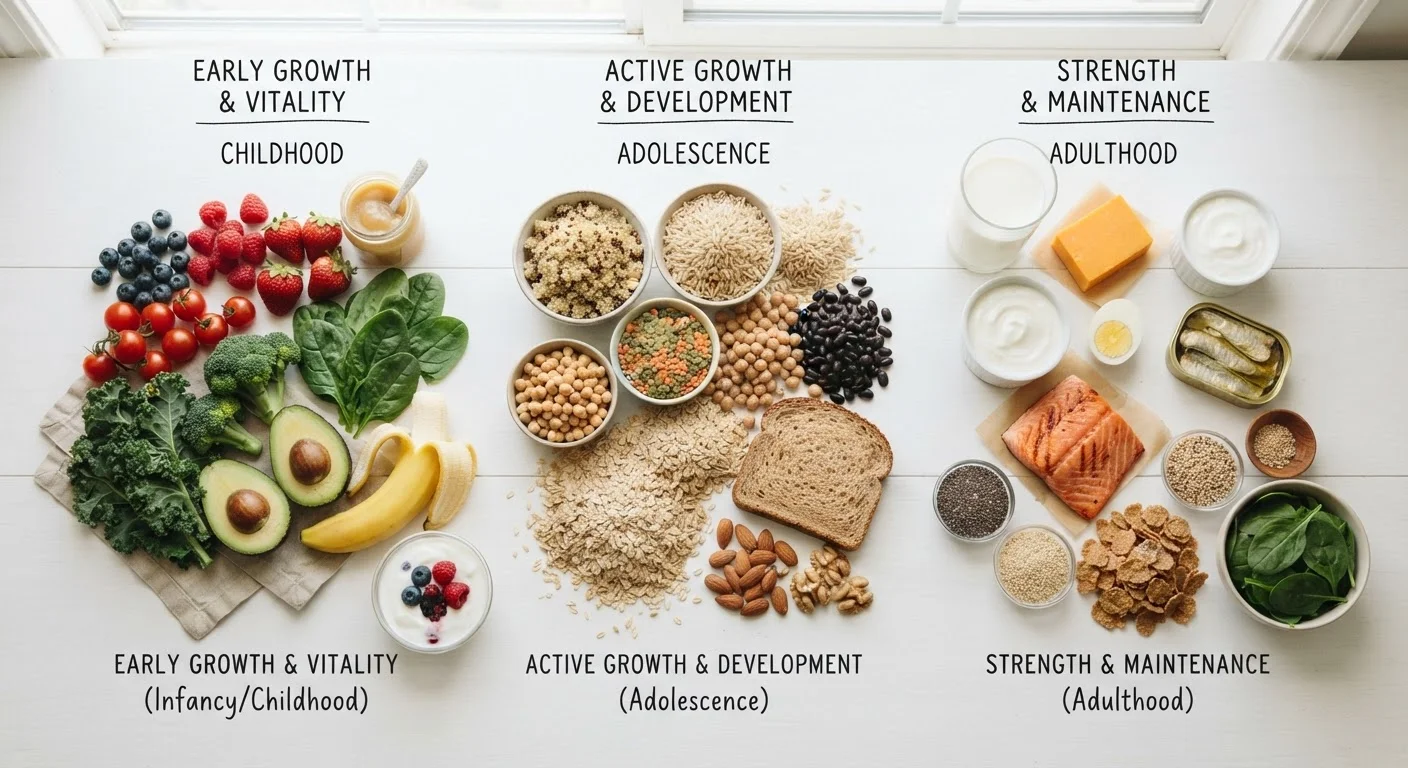
Key Takeaways
- Caloric needs generally decline with age, while requirements for certain micronutrients increase.
- Protein becomes especially important in later adulthood to help preserve muscle mass.
- Bone-supporting nutrients like calcium and vitamin D warrant attention across all adult life stages.
- Metabolic changes in midlife often call for a closer look at fiber and healthy fat intake.
- No single diet suits every phase of life — periodic reassessment with a professional is valuable.
Why Nutritional Needs Change Through Adulthood
The human body is not static. From the late teens onward, physiological shifts — changes in muscle mass, bone density, hormone levels, and digestive efficiency — gradually alter how the body uses nutrients. These changes don't happen overnight, but they do accumulate in ways that make the dietary patterns that worked at 25 a poor fit at 55.
Understanding how and why these shifts occur is the first step toward eating in a way that genuinely supports health at each phase of life. This article offers a general, evidence-informed overview — not a prescriptive meal plan. For guidance tailored to your individual health status, always work with a qualified healthcare or registered dietitian professional.
It's also worth noting that nutritional science continues to evolve. Recommendations here reflect broadly established consensus, while emerging research is noted as such. For a deeper look at how subtle dietary habits can quietly erode nutritional balance at any age, see our article on patterns that undermine a balanced diet.
Early Adulthood (20s–30s): Building a Strong Foundation
The twenties and thirties represent a window during which many foundational health markers — bone density, metabolic rate, and muscle mass — are still being consolidated or are near their peak. Dietary choices during this phase have compounding long-term effects.
- Bone density: Peak bone mass is largely established by the late twenties. Adequate calcium and vitamin D intake during early adulthood supports this process. Dairy, fortified plant milks, leafy greens, and fatty fish are commonly cited dietary sources.
- Iron: People who menstruate have higher iron requirements during reproductive years. Plant-based sources of iron are less readily absorbed, so pairing them with vitamin C-rich foods can enhance uptake.
- Folate: Particularly relevant for those who may become pregnant, folate (found in legumes, leafy greens, and fortified foods) supports healthy fetal neural development. Those planning a pregnancy should consult a healthcare provider about supplementation.
- Establishing patterns: Research consistently links dietary patterns — not just individual nutrients — to long-term health outcomes. Building a habit of varied, whole-food-focused eating during early adulthood sets a durable baseline.
Building balanced meals offers practical composition strategies that apply regardless of dietary preference.
In your twenties and thirties, treat dietary variety as an investment — the more diverse your food intake now, the broader the micronutrient base you're building for decades ahead.
Nutritional deficiencies that develop gradually over years are often harder to detect and correct than those that arise acutely; early dietary breadth reduces cumulative risk.
When evaluating your midlife diet, focus first on what you're adding — more fiber, more vegetables, more varied protein sources — rather than solely on what to cut.
Research on dietary behavior change suggests that additive strategies (increasing beneficial foods) tend to be more sustainable than restrictive ones for most adults.
Midlife (40s–50s): Adapting to Metabolic and Hormonal Shifts
Midlife brings physiological changes that can catch people off guard if their diet hasn't evolved. Resting metabolic rate tends to decline gradually — meaning the body burns somewhat fewer calories at rest — while hormonal transitions (including perimenopause and andropause) can affect body composition, bone health, and cardiovascular risk factors.
- Caloric recalibration: A modest reduction in overall caloric intake may align better with reduced energy expenditure, though individual variation is significant. Focusing on nutrient-dense foods — those that deliver vitamins, minerals, and fiber relative to their calorie content — becomes increasingly important.
- Fiber: Adequate dietary fiber supports digestive health, helps regulate blood glucose, and is associated with reduced cardiovascular risk. Whole grains, legumes, vegetables, and fruits are reliable sources.
- Calcium and vitamin D (again): Bone loss accelerates around menopause. Both nutrients continue to warrant attention, and some individuals in this life stage may benefit from professional guidance on whether dietary intake alone is sufficient.
- Healthy fats: Unsaturated fats from sources such as olive oil, nuts, avocados, and fatty fish are associated with cardiovascular benefits. Saturated fat intake is generally advised to remain moderate.
For a look at how incremental dietary adjustments accumulate into meaningful change, see small dietary shifts that add up over time.
Later Adulthood (60s and Beyond): Prioritizing Nutrient Density
Several nutritional priorities sharpen in later adulthood. Appetite may decrease, digestive efficiency can decline, and certain nutrients become harder to absorb — even when dietary intake appears adequate.
~1 in 3
Older adults with inadequate protein intake
Research published in nutrition journals suggests that a significant proportion of adults over 65 consume less protein than recommended reference intakes for their age group.
40%
Reduction in vitamin D skin synthesis with age
Studies indicate that the skin's capacity to synthesize vitamin D from sunlight exposure may decline by roughly 40% or more between young adulthood and older age.
- Protein: Older adults generally require relatively more dietary protein per unit of body weight than younger adults to help maintain muscle mass and function. Lean meats, fish, eggs, legumes, and dairy are common sources. Distributing protein across meals — rather than concentrating it in one sitting — may improve utilization, though individual needs vary.
- Vitamin B12: Absorption of B12 from food can decline with age due to changes in stomach acid production. Some older adults may have difficulty meeting needs through diet alone; a healthcare provider can assess whether supplementation is appropriate.
- Vitamin D: Skin synthesis of vitamin D becomes less efficient with age. Dietary sources and, where indicated by a clinician, supplementation become more relevant.
- Hydration: The sense of thirst becomes less reliable with age, increasing the risk of dehydration. Consistent fluid intake — primarily from water and whole foods — is important even in the absence of thirst signals.
Understanding key micronutrients and their roles can help contextualize why these shifts matter.
Principles That Hold Across Every Life Stage
Despite the differences between life stages, several nutritional principles remain consistently supported by evidence throughout adulthood:
- Variety: A diet that includes a wide range of vegetables, fruits, whole grains, proteins, and healthy fats is more likely to cover the full spectrum of micronutrient needs than a narrow or repetitive one.
- Minimally processed foods: Diets centered on whole or minimally processed foods are associated with better long-term health outcomes across populations.
- Moderation over elimination: Sustainable dietary patterns tend to involve moderation rather than the elimination of entire food groups, unless there is a specific medical or ethical reason to do so.
- Personalization: Individual factors — health conditions, medications, activity level, cultural food practices, and personal preference — shape what a good diet looks like for any given person.
These principles are consistent with the guidance offered in our balanced meals principles guide, which addresses how these ideas translate into everyday meal construction.
When to Consult a Professional
General nutrition information is a useful starting point, but it cannot replace individualized guidance — especially when health conditions, medications, or significant life transitions are involved.
Consider consulting a registered dietitian or your primary care provider if you:
- Are managing a chronic condition such as diabetes, cardiovascular disease, or kidney disease
- Have experienced significant unintentional weight change
- Are pregnant, breastfeeding, or planning a pregnancy
- Are navigating menopause or a significant hormonal transition
- Have concerns about nutrient deficiencies or are considering supplementation
Supplements Are Not a Substitute for Food
The appeal of filling nutritional gaps with supplements is understandable, but most health authorities advise prioritizing whole food sources where possible. Supplements can interact with medications, and more is not always better — some nutrients are harmful in excess. Always discuss supplementation with a qualified healthcare provider before starting.
This article is for general informational and educational purposes only. It is not a substitute for professional medical or nutritional advice, diagnosis, or treatment. Always consult a qualified healthcare provider with questions about your individual nutritional needs or health status.