

Key Takeaways
- Stress usually has a clear cause; anxiety can persist without one.
- Both conditions activate the body's stress-response system, but through different pathways.
- Chronic stress and anxiety can co-exist and reinforce each other over time.
- Recognizing which you're experiencing is a useful first step toward appropriate support.
- A qualified healthcare professional is the right resource for personal assessment and guidance.
Anxiety vs. Chronic Stress
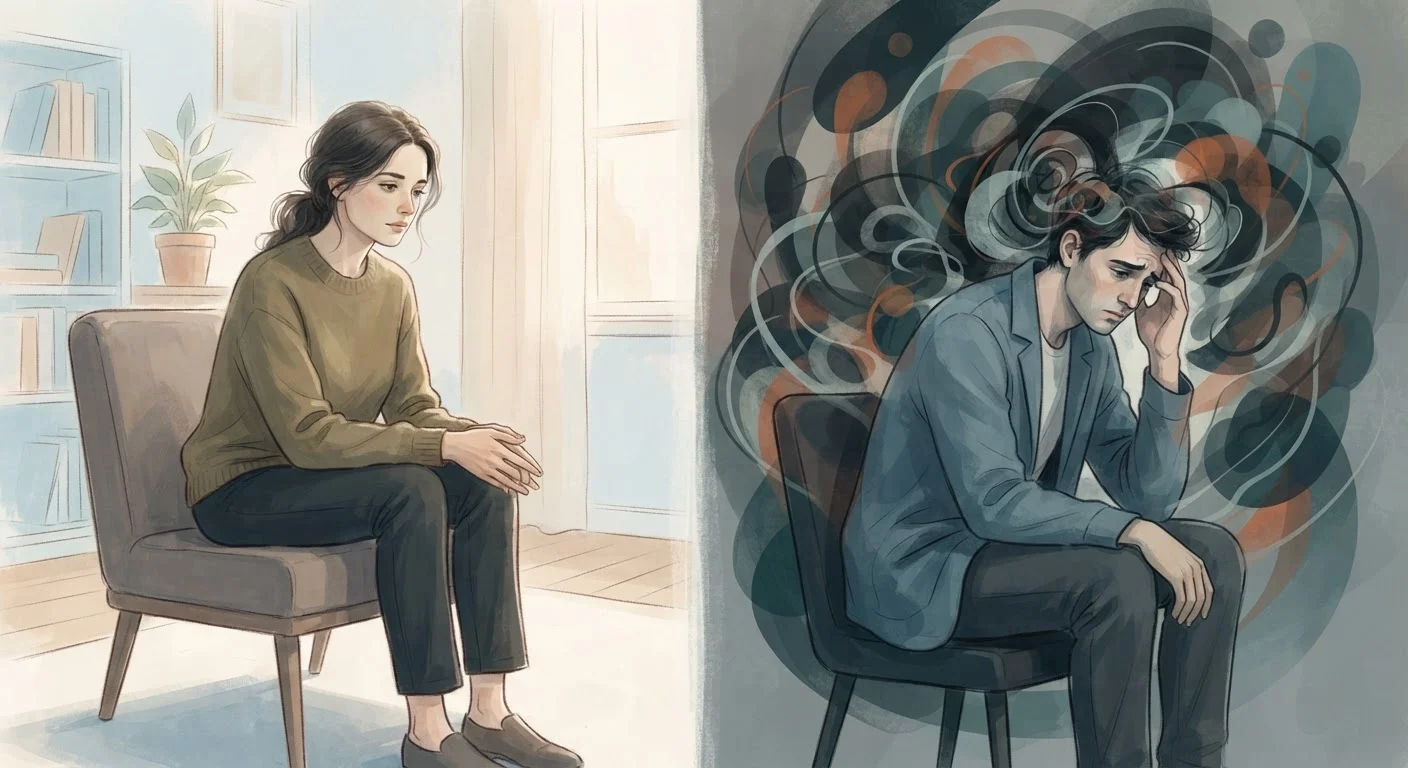
Stress is typically a response to an identifiable external pressure — a deadline, a conflict, a financial strain. Anxiety, by contrast, is a persistent state of worry or dread that may continue even when no clear threat is present. Both involve the body's stress-response system, but they differ in origin, duration, and the way they affect daily functioning.
In clinical frameworks, anxiety disorders are characterized by disproportionate fear responses that are internally driven and difficult to regulate; chronic stress, while potentially contributing to anxiety, is defined by sustained external demand exceeding a person's perceived coping resources.
The Core Distinction: Source and Persistence
Stress and anxiety are not interchangeable terms, though they are frequently used as if they were. The most important distinction lies in where the experience originates and how long it persists.
Stress is generally reactive. It emerges in response to a concrete, identifiable demand — a looming work deadline, a difficult conversation, financial pressure. When the trigger resolves, the stress typically subsides. Chronic stress occurs when those triggers don't let up: the pressure is ongoing, and the body never fully returns to a resting state.
Anxiety operates differently. It can arise without a clear external cause, or persist long after a stressor has passed. A person experiencing anxiety may recognize intellectually that a threat has gone — yet continue to feel a low hum of dread or worry. This self-perpetuating quality is what distinguishes anxiety from a straightforward stress response.
Recognizing when your mental load has tipped into something unmanageable is a meaningful early step, and understanding the difference between these two states can help you describe your experience more accurately to a healthcare provider.
What Happens Inside the Body
Both stress and anxiety activate what is commonly called the fight-or-flight response — a cascade of physiological changes governed by the autonomic nervous system and hormones such as cortisol and adrenaline. Heart rate rises, muscles tense, and digestion slows. This response is designed to be short-lived and protective.
Under chronic stress, this system stays partially activated for extended periods. Research in psychoneuroimmunology suggests that sustained cortisol elevation can affect immune function, cardiovascular health, and sleep quality. For a broader look at those effects, this plain-language overview of what chronic tension does to the body explores the evidence in more detail.
With anxiety, the nervous system can become hypervigilant — scanning for threat even in neutral situations. Over time, this pattern can lower the threshold for triggering a stress response, making the body react more readily and intensely to everyday situations.
33%
Adults reporting extreme stress levels
The American Psychological Association's Stress in America surveys have consistently found roughly a third of U.S. adults describing their stress as extreme.
19%
U.S. adults affected by anxiety disorders annually
According to the Anxiety and Depression Association of America, anxiety disorders are the most common mental health condition in the United States.
~50%
People with anxiety also experience depression
The ADAA notes that nearly half of those diagnosed with depression also receive a diagnosis of an anxiety disorder, reflecting how frequently these conditions co-occur.
How Context Shapes Both Experiences
It is worth acknowledging that external circumstances play a powerful role in both stress and anxiety. Financial strain, for example, is a well-documented source of chronic stress — and it can also amplify anxiety symptoms. The relationship between debt and mental health illustrates how specific life pressures create cycles that are difficult to exit without addressing both the practical and psychological dimensions.
Life events like job loss, caregiving responsibilities, relationship difficulty, or housing insecurity can sustain stress at levels the body was not designed to manage long-term. When those pressures feel inescapable, they can begin to feed anxious thought patterns even in moments of relative calm — blurring the boundary between the two experiences.
Understanding context does not minimize what a person feels; it helps frame a response that addresses real causes rather than only managing symptoms.
When to Seek Professional Guidance
Neither stress nor anxiety should be treated as character flaws or signs of weakness. Both are common, and both exist on a spectrum — from mild and manageable to significantly disruptive to daily life.
General wellness strategies — consistent physical activity, restorative sleep, mindfulness practices, and social connection — are broadly supported by research as helpful for emotional resilience. Grounding techniques for acute stress are one example of evidence-informed approaches that many people find useful in difficult moments.
However, if worry or tension is interfering with work, relationships, or physical health on a regular basis, that is a meaningful signal. A licensed mental health professional — such as a psychologist, licensed counselor, or psychiatrist — is equipped to evaluate what you are experiencing, offer a proper assessment, and discuss options suited to your specific situation.
Self-education is a legitimate and valuable starting point. But understanding the difference between stress and anxiety at a conceptual level is not the same as knowing what is happening in your own nervous system — and that distinction matters.
This article is for general informational and educational purposes only and is not a substitute for professional medical or mental health advice. If you are concerned about your mental health, please consult a qualified healthcare professional.